Of the 260 batteries processed, 70% were regenerated to 100% of their performance.
How can you extend the service life of a backup battery bank without compromising the availability of the equipment it protects?
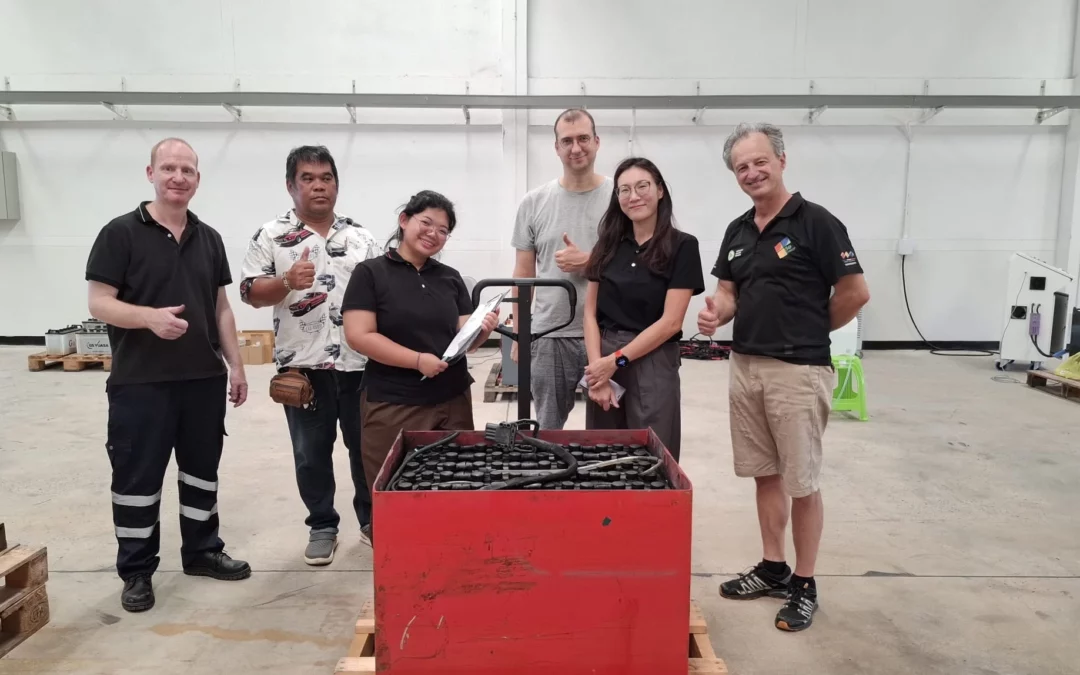
For nearly a month, Be Energy teams worked at the heart of a metro network to diagnose and regenerate 260 stationary backup batteries.
The operation was carried out directly on site, with one major constraint: maintaining uninterrupted service throughout the entire intervention.
260 stationary batteries at the heart of a critical infrastructure
Telecommunications, transport, data centers, industry, healthcare facilities… many infrastructures rely on stationary batteries to provide backup power in the event of a power outage.
Unlike traction batteries, they are not designed for daily use. They spend much of their service life on standby but must be able to deliver the required power immediately when a failure occurs.
This function therefore requires a particularly high level of reliability.
It was precisely in this context that Be Energy worked for nearly a month within a metro network. In total, 260 stationary backup batteries had to be processed without taking the equipment they protected out of service.

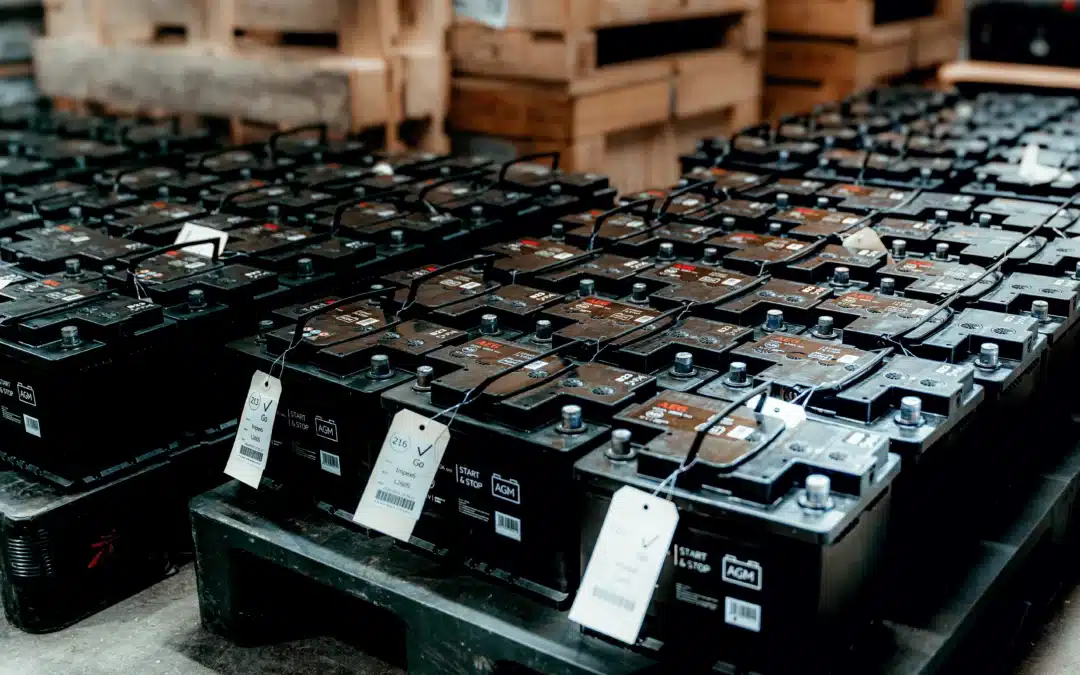
Stationary batteries provide essential backup power: although rarely used on a daily basis, they must be immediately available in the event of a power outage.
Regenerating batteries without compromising service continuity

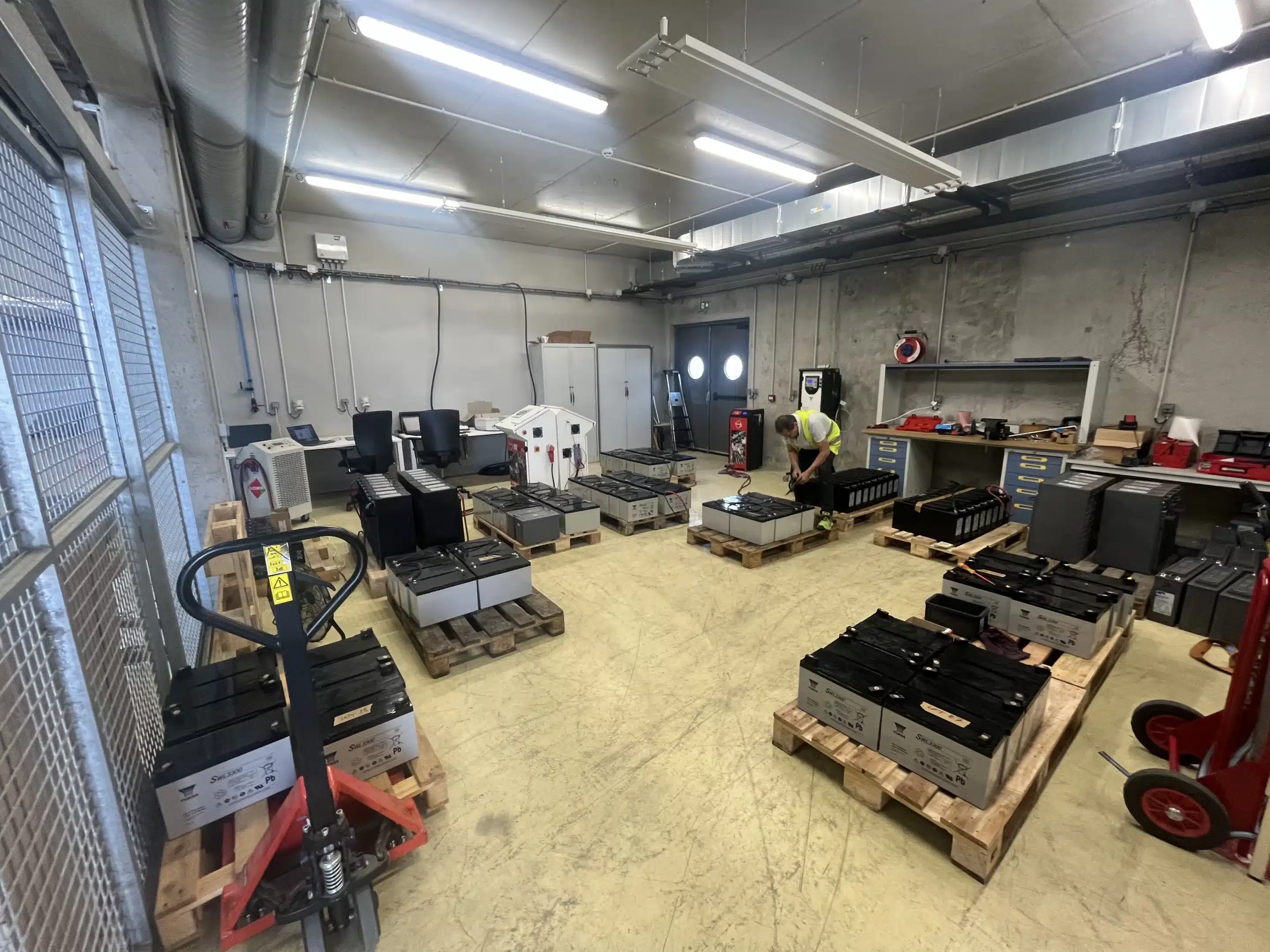
Battery rotation allows regenerated units to be progressively reintegrated without taking the entire battery bank out of service.
On an operational infrastructure, removing all the batteries at the same time for regeneration is obviously not an option. We therefore organized the intervention around a battery rotation system.
Our teams first removed an initial batch from the battery bank and installed new batteries in its place to maintain the availability of the installations. They then diagnosed the removed batteries to determine their actual condition and recovery potential.
We regenerated the units that could be recovered, then tested their performance before reintegrating them into the battery bank. Their return allowed us to release a new batch and progressively repeat the process throughout the intervention.
The objective was therefore not simply to regenerate batteries, but to integrate regeneration into a comprehensive battery bank maintenance strategy compatible with the site’s operational constraints.
70% of the battery bank restored to 100% of its performance
At the end of the operation, 70% of the 260 batteries processed were successfully regenerated to 100% of their performance.
Batteries whose condition did not allow them to reach the expected performance level were removed and replaced with new batteries.
This distinction is essential: regeneration is not intended to keep a battery in service when it no longer meets the performance requirements for its intended use.
Diagnostics and requalification make it possible to identify which batteries can continue their service life and which need to be replaced.

Processing the battery bank in batches allows the installations to remain operational throughout the intervention.
Replace or regenerate a battery: why is diagnostics essential?
When managing a stationary battery bank, the age of a battery alone is not always enough to determine its actual condition.
Operating conditions, temperature, charge maintenance, depth of discharge and sulfation can cause batteries installed at the same time to age differently.
Diagnostics therefore make it possible to move away from systematic replacement and adopt an approach based on the actual condition of each battery.
A battery that is still fully operational can remain in service. A battery whose performance has declined but whose condition allows it can be regenerated. Finally, a battery with irreversible degradation must be replaced.
This approach makes it possible to intervene at the right time and focus the purchase of new batteries on equipment that genuinely needs them.
Regeneration as a battery bank management tool
This intervention also demonstrates that regeneration should not necessarily be considered only when a battery reaches the end of its service life.
Integrated into a preventive maintenance strategy, it can become a valuable battery bank management tool, making it possible to monitor performance over time, identify batteries experiencing capacity loss and progressively plan interventions.
For operators managing dozens or even hundreds of stationary batteries, this approach provides greater control over replacements and avoids renewing an entire battery bank when only some of the batteries actually need to be replaced.
The result is a proactive battery bank management approach that combines equipment availability, cost control and extended service life for existing assets.

Before any regeneration, diagnostics help identify which batteries can continue their service life and which need to be replaced.
One month of intervention at the heart of the network
For nearly a month, Be Energy installed its regeneration equipment directly at the heart of the infrastructure.
Diagnostics, handling, regeneration, performance testing and rotation of the different batches: the intervention required daily organization adapted to the site’s operational constraints.
Beyond the 260 batteries processed and the 70% regenerated to 100% of their performance, this operation demonstrates how regeneration can be integrated into the maintenance strategy of an operational infrastructure.
A different approach to stationary battery management: assessing their condition, extending the service life of those that can be recovered, and replacing only the batteries that genuinely need to be replaced.
Do you manage a stationary battery bank?
Do you manage a stationary battery bank to protect your equipment or provide backup power? Be Energy can help you assess the condition of your batteries and identify the solutions best suited to your installation.
Contact our teams for a personalized diagnostic assessment of your battery bank and determine which batteries can remain in service, be regenerated or need to be replaced.
To go further…
Can all stationary batteries be regenerated?
No. A preliminary diagnostic assessment determines the actual condition of each battery and identifies those that can be regenerated while maintaining the required levels of performance and reliability.
When should stationary battery regeneration be considered?
Regeneration can be carried out preventively or when the first signs of capacity loss appear. Regular monitoring of the battery bank makes it possible to take action before performance becomes insufficient.
Can a battery bank be regenerated without interrupting operations?
Yes. A batch-based approach and a battery rotation system allow the batteries to be processed progressively while maintaining uninterrupted operation of the equipment.