
Integrating ESG criteria helps companies better manage their impacts, anticipate risks and strengthen trust among their clients and partners.
We regularly highlight the environmental benefits of battery regeneration: extending battery lifespan, reducing waste, preserving resources and cutting CO₂ emissions associated with battery replacement. These benefits are central to Be Energy’s CSR approach, but they do not reflect the full extent of our responsibilities.
We also wanted to ask ourselves another question: what is our own environmental and social impact as a company?
Although our business is based on the principles of the circular economy, like any company, we have responsibilities towards our employees, clients, partners and the environment.
That’s why we decided to embrace transparency by having our own practices independently assessed, through a CSR maturity assessment conducted by Groupe Rive Neuve as part of Bpifrance’s Diag Impact programme.
ESG Criteria: What Exactly Are They?
When discussing corporate responsibility, the environment is often the first thing that comes to mind. However, a company’s commitments go beyond its energy consumption or CO₂ emissions.
This broader perspective is reflected in the ESG criteria (Environmental, Social and Governance), which cover three main areas:
- Environmental (E): greenhouse gas emissions, resource use, energy consumption, waste management and impacts on ecosystems.
- Social (S): working conditions, employee health and safety, training, inclusion and relationships with stakeholders.
- Governance (G): business ethics, transparency, regulatory compliance, risk management and decision-making processes.
These criteria provide a more comprehensive assessment of a company, going beyond its financial and environmental performance alone.
For Be Energy, it was important to apply this approach to our own operations, rather than focusing solely on the benefits of our solutions.
Be Energy’s CSR Approach: An Assessment of Our Practices
To carry out this initiative, we benefited from the Diag Impact programme offered by Bpifrance, a support programme designed to help companies better integrate social and environmental considerations into their business strategies.
Working with Groupe Rive Neuve, we conducted a CSR maturity assessment based on the seven core subjects of the international ISO 26000 standard:
- Organisational governance;
- Human rights;
- Labour practices;
- The environment;
- Fair operating practices;
- Consumer issues;
- Community involvement and development.
This assessment went beyond simply reviewing our practices. It also involved consulting several stakeholders, including employees, management and a representative of our international network.
The aim was to compare our own perspective on the company with the expectations and experiences of those involved in its activities.
What Are the Key Findings of Our CSR Assessment?
The assessment reaffirmed Be Energy’s commitment to the circular economy, innovation, job creation and skills development.
This approach also reflects our contribution to the Sustainable Development Goals, particularly in terms of responsible production and climate action.
The assessment also gave us an opportunity to take a step back and review our practices, helping us better structure the priorities of our CSR approach.
As a result, four priority areas were identified to support our development and strengthen our commitments.
1. CSR Governance and Regulatory Compliance
Better structure our CSR approach, formalise our commitments and strengthen the monitoring of our practices and the regulations applicable to our activities.
2. Human Capital and Working Conditions
Place particular emphasis on skills development, working conditions, risk prevention and dialogue with our employees.
3. Environment and Value Creation
We already measure some of the environmental benefits of battery regeneration, particularly the CO₂ emissions avoided compared with replacing batteries with new ones.
However, the assessment highlighted the importance of going further by more closely monitoring our energy consumption, resource use and the emissions generated by our own operations.
4. Product Responsibility and Customer Relations
Strengthen the monitoring of customer satisfaction, improve complaint-handling procedures and better integrate responsible business practices throughout our value chain.
These four priority areas give us a clearer understanding of where to focus our efforts.
A Commitment to Transparency
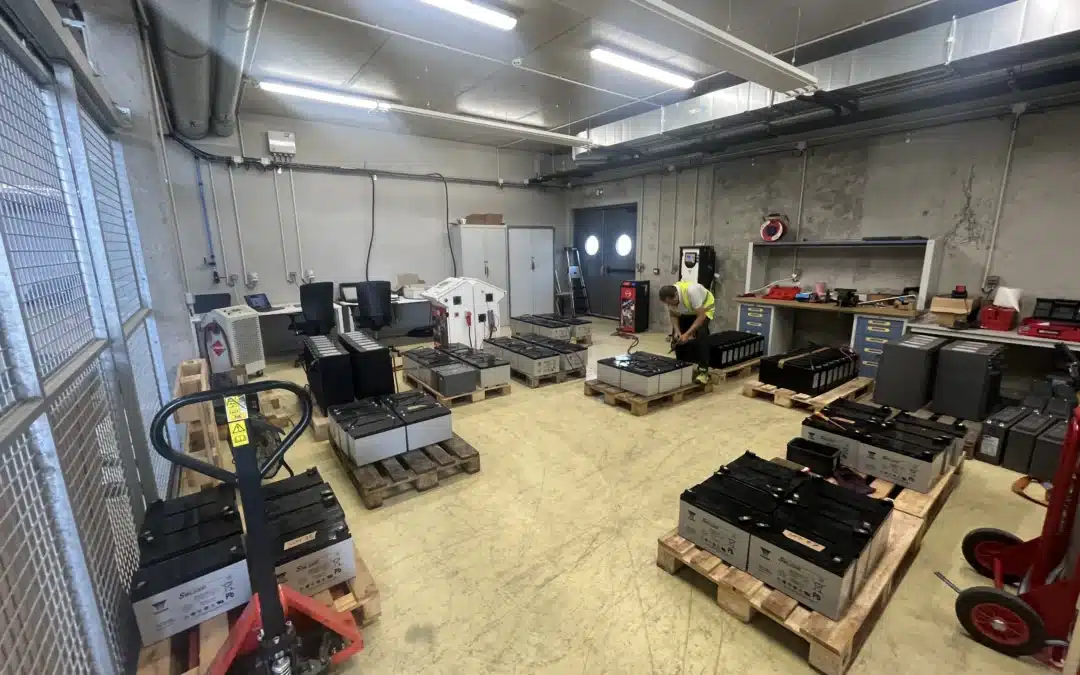
In our workshops, every battery undergoes a diagnostic assessment to measure its performance, evaluate its condition and determine the most appropriate interventions to extend its lifespan.
With this CSR assessment, we wanted to apply the same approach to our company: take a step back to review our practices, gain an external perspective and establish priorities to strengthen our commitments.
Our activities help reduce the environmental impact associated with battery replacement. This commitment is an integral part of our identity, but corporate responsibility extends far beyond a company’s core business.
Working conditions, relationships with our partners, business practices and the way we make decisions are all important aspects of our CSR approach.
By taking part in this assessment, we wanted to go beyond our environmental commitments and adopt a comprehensive, structured and transparent approach to our responsibilities as a company.
This assessment provides a clearer framework for Be Energy’s CSR approach, taking into account the different aspects of our operations.
And just like the batteries we regenerate, it all starts with a thorough diagnosis: measuring, understanding and identifying the actions needed to achieve lasting improvements.
To Go Further…
Why should a company commit to Corporate Social Responsibility (CSR)?
Adopting a CSR approach helps companies better manage their environmental and social impacts, improve their practices and anticipate the expectations of their customers and partners. It also helps strengthen their competitiveness and build a more sustainable business model.
What are the benefits of integrating ESG criteria into a company's practices?
Integrating ESG criteria helps companies better manage risks, optimise resources and strengthen the trust of their customers, partners and investors. It can also improve competitiveness, facilitate access to certain sources of funding and help anticipate regulatory changes.
Are ESG criteria mandatory for all companies?
No, not all companies are subject to the same regulatory requirements regarding ESG reporting. However, even when they are not legally required to do so, companies can choose to integrate these criteria to better measure their impacts and meet their stakeholders’ expectations.