


Be Energy : Solutions Batteries Plus
LEAD-ACID BATTERIES
Traction battery maintenance: 7 mistakes that shorten its service life
Loss of autonomy appears gradually. Charging times may change, some cells may begin to show discrepancies and, over time, the forklift may no longer be able to complete a full shift.
This ageing process is normal. However, certain practices can significantly accelerate it.
Whether the batteries are from HOPPECKE, EnerSys / Hawker, Exide Technologies, TAB, Midac, Crown Battery or other traction battery manufacturers, their operating and maintenance recommendations converge on several key points: controlling depth of discharge, using an appropriate charging strategy, monitoring electrolyte levels, keeping the battery clean and checking its condition regularly.
These good practices provide a common basis for preserving the performance of a lead-acid battery and limiting premature ageing.
Charging, depth of discharge, water level, temperature or maintenance: here are 7 common mistakes that can shorten the service life of a lead-acid traction battery, along with the good practices that can help avoid them.
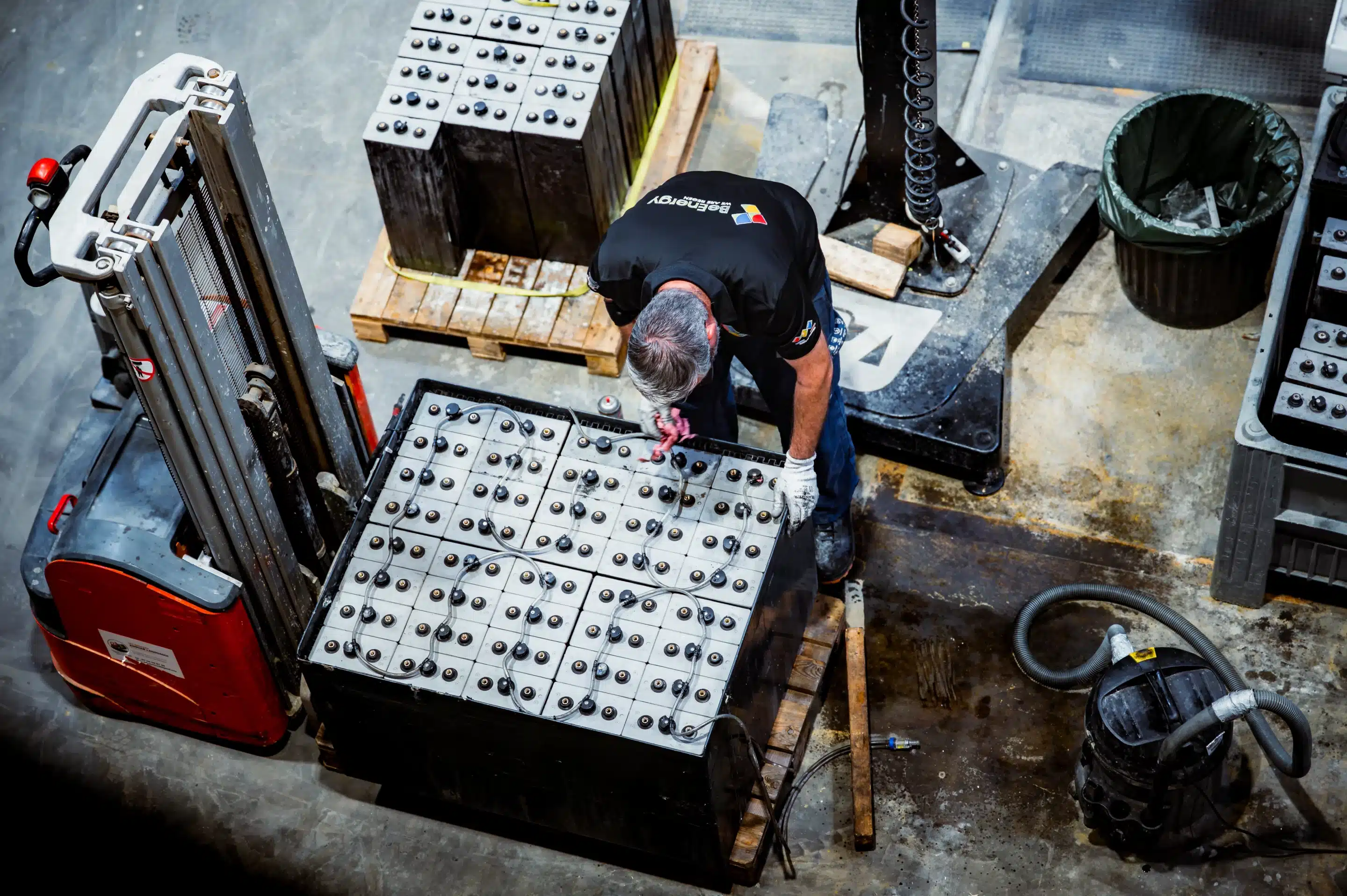
1. Regularly discharging the battery beyond 80%
A lead-acid traction battery is designed to withstand many charge and discharge cycles. However, this does not mean it should systematically be used until it is fully depleted.
Depth of discharge, also known as Depth of Discharge or DoD, refers to the proportion of the battery’s capacity that has been used.
A depth of discharge of 80% therefore means that around 20% of the available capacity remains.
This 80% threshold is a common reference for lead-acid traction batteries. Regularly discharging beyond this level can accelerate ageing and reduce service life.
It is also important to avoid leaving a battery in a deeply discharged state for too long.
When a lead-acid battery is discharged, lead sulfate naturally forms on the plates. When the battery is properly recharged, this reaction is largely reversible. However, if the battery remains discharged for too long, the crystals can become harder to convert back during charging.
This phenomenon is known as sulfation.
Good practice: monitor the fleet’s discharge levels and recharge batteries in line with the manufacturer’s recommendations and the operating strategy defined on site.
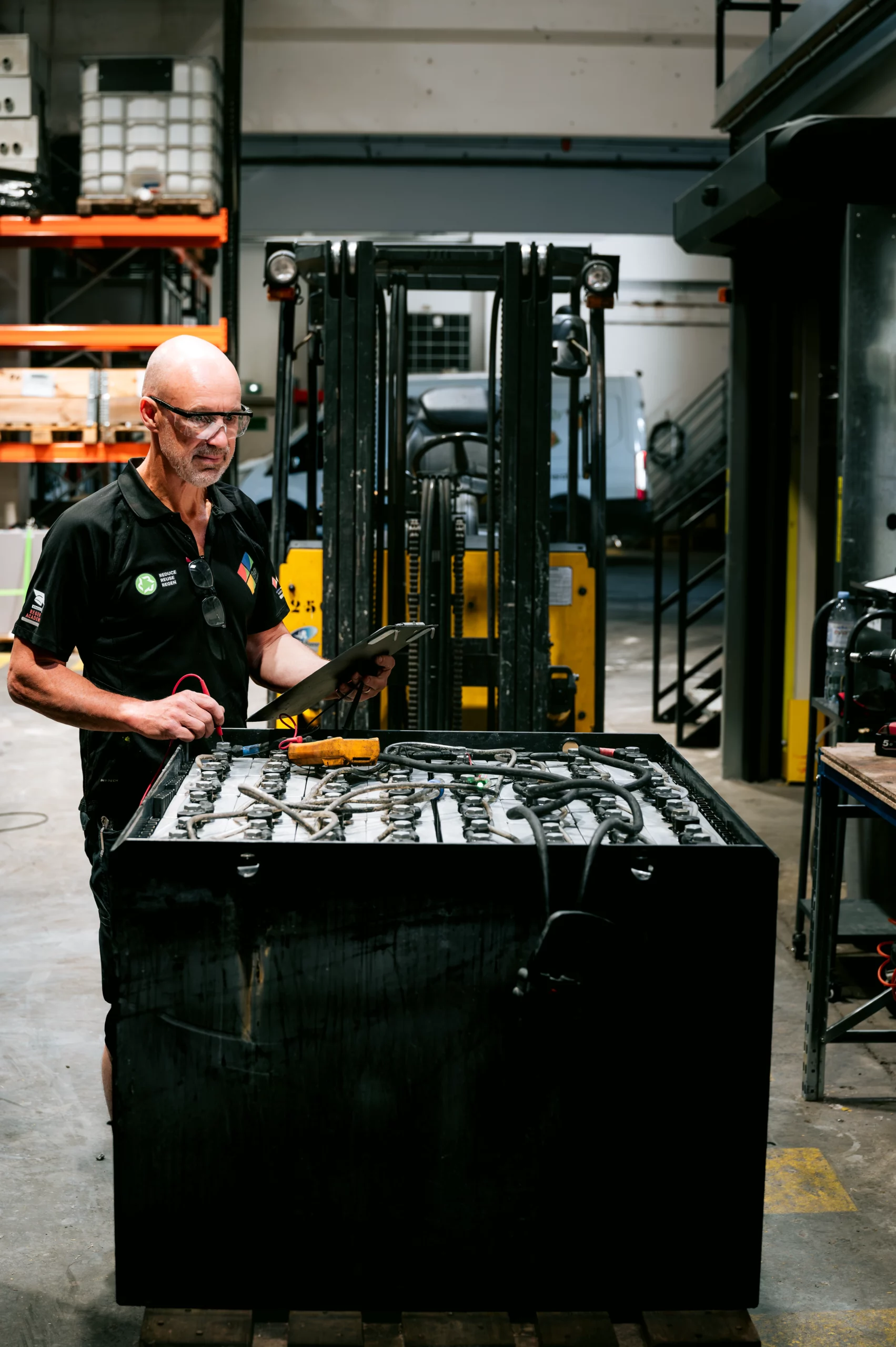
2. Charging without a proper charging strategy
Regularly plugging in a battery does not necessarily mean it is being charged correctly.
It is important to distinguish between a genuine opportunity charging strategy and occasional short charging sessions whenever a forklift becomes available.
In some multi-shift operations, opportunity charging can be perfectly suitable. However, it requires a battery, charger and operating setup designed for this type of use.
By contrast, repeatedly carrying out very short charging sessions without a defined strategy can increase battery temperature and prevent full charging cycles from being completed regularly.
Charging times should therefore be adapted to the actual operating conditions of the fleet and to the characteristics of the battery.
Equalisation charges may also be required for certain flooded lead-acid batteries in order to reduce differences between individual cells. Their frequency depends on the battery technology and the manufacturer’s recommendations.
Good practice: define a charging strategy that matches your operating schedule rather than systematically plugging batteries in whenever a socket and a few spare minutes are available.
3. Using a charger that is not properly matched to the battery
The battery and its charger work as a single system.
The voltage, capacity, battery technology and charging profile must all be compatible.
Repeated undercharging can gradually lead to a loss of performance. Conversely, excessive overcharging can increase battery temperature and water consumption.
Both situations can accelerate battery ageing.
Ensuring compatibility between the battery and its charger is therefore an essential part of proper maintenance.
For larger fleets, clearly matching each battery with the correct charger also helps prevent errors when different voltages or capacities are used on the same site.
Good practice: make sure each battery is paired with a compatible charger that is correctly configured.
4. Neglecting the electrolyte level
This section applies to flooded lead-acid traction batteries, which use a liquid electrolyte.
During charging cycles, some of the water contained in the electrolyte is gradually consumed. The level therefore needs to be checked regularly.
If the level becomes too low, part of the plates may eventually become exposed, which can lead to damage.
However, the opposite mistake can also occur: adding too much water.
The electrolyte level changes during charging. If a battery is overfilled before the charging cycle, the electrolyte may overflow as the level rises.
These overflows can leave acid residue on the battery tray, cells or connections and promote corrosion.
For the batteries concerned, the final water top-up is generally carried out after charging. If the plates are exposed beforehand, a limited amount of water can be added to cover them before completing the final top-up once charging is finished.
The water used must also comply with the manufacturer’s specifications, generally demineralised or purified water.
Good practice: check the electrolyte level regularly and follow the watering procedure specified for the battery.
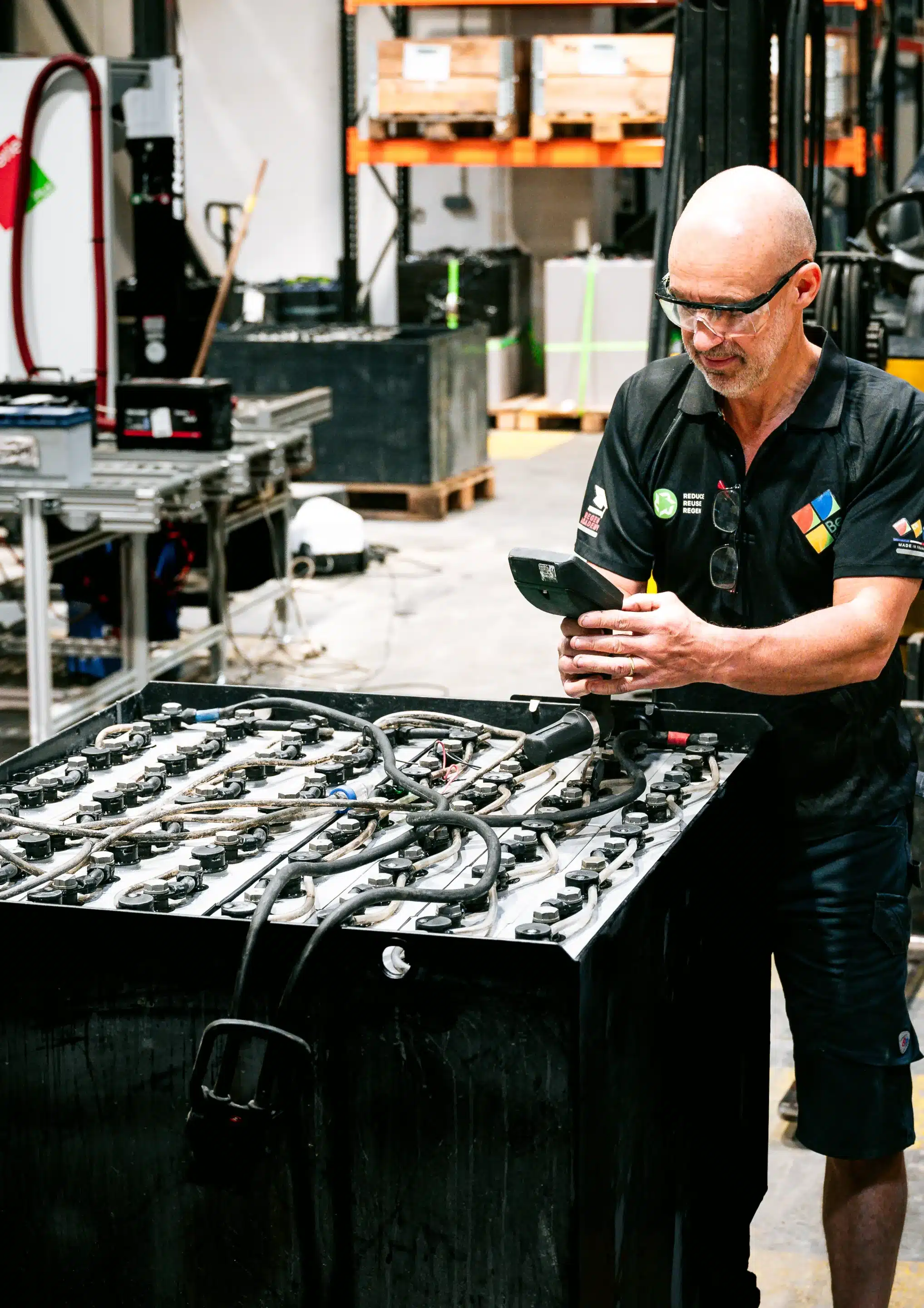
Is your battery already losing autonomy?
A drop in performance does not necessarily mean it needs to be replaced. Find out how to assess its condition and identify its regeneration potential.
5. Letting dust, residue and corrosion build up
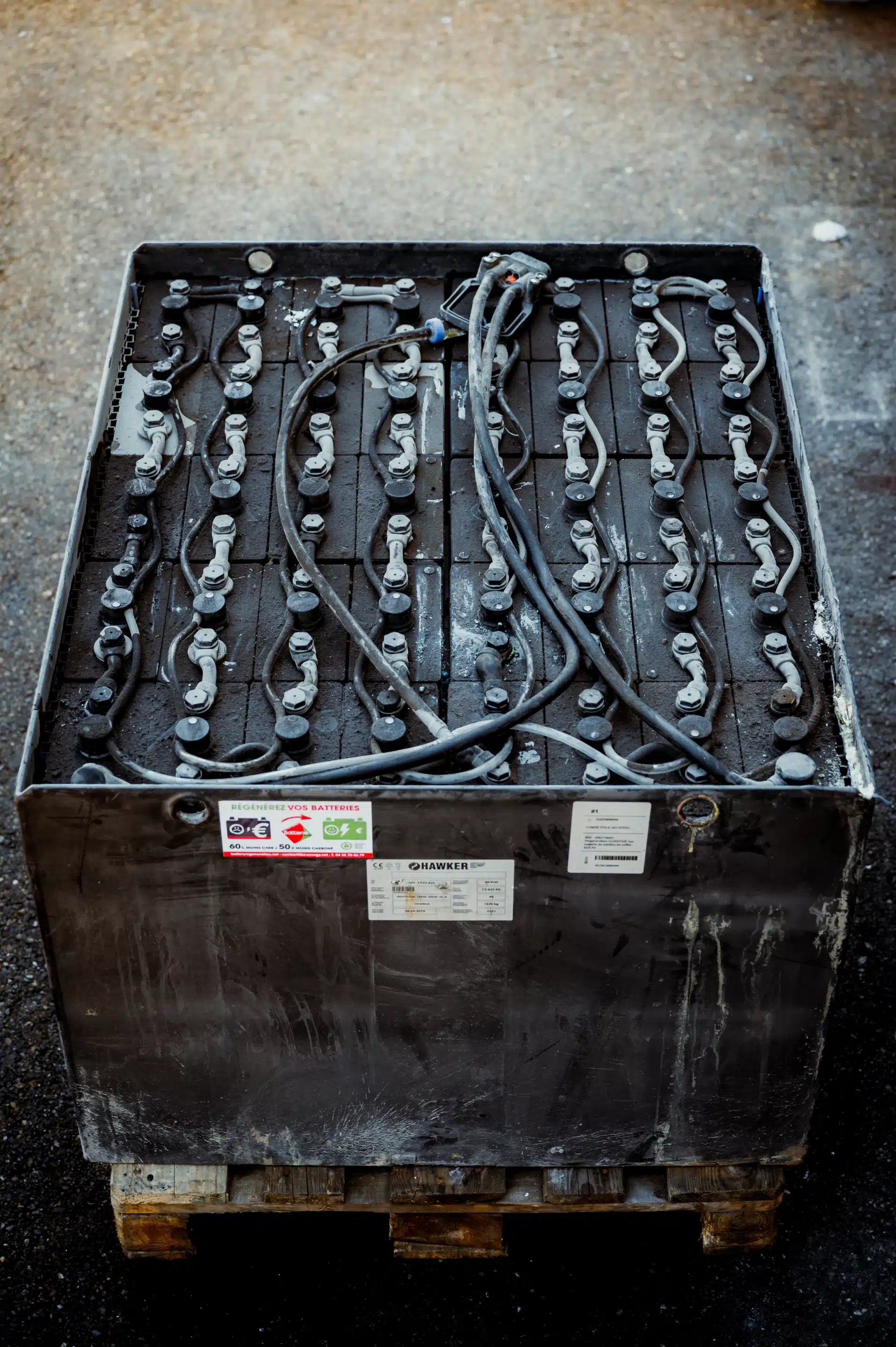
Battery maintenance is not only about what happens inside the cells.
Over time, different types of deposits can build up on the surface:
- dust;
- dirt;
- moisture;
- electrolyte residue;
- signs of corrosion.
When some of these deposits become conductive, they can promote leakage currents across the surface of the battery.
This is one of the reasons why maintenance recommendations advise keeping batteries clean and dry.
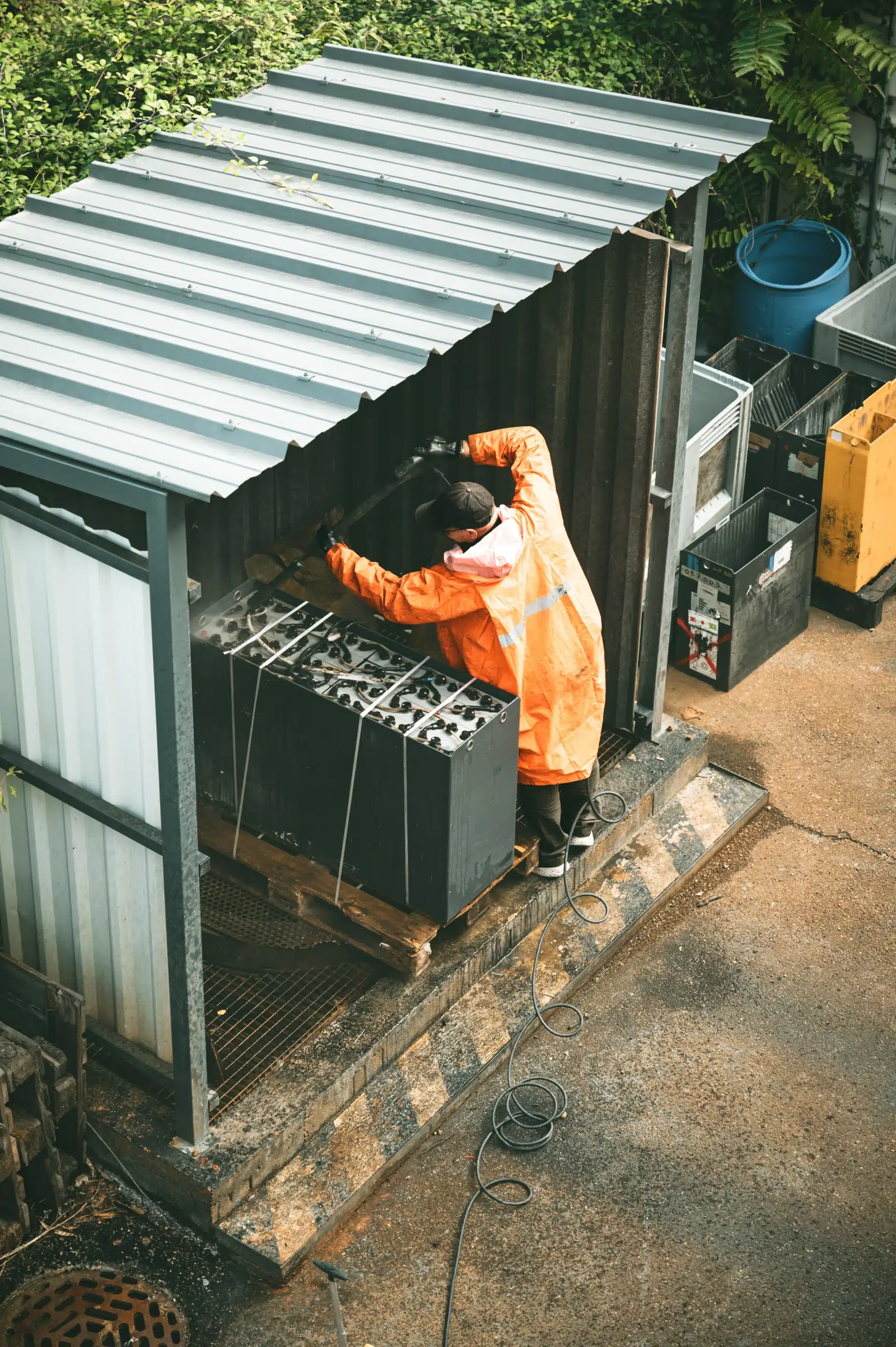
Cleaning also offers another important benefit: it makes the battery easier to inspect.
Once the battery is clean, it becomes easier to identify a damaged cable, an oxidised connection, a defective vent cap, a leak or an issue with the battery tray.
This is why, at Be Energy, cleaning is one of the first steps in the lead-acid battery treatment process.
It helps remove persistent dirt, possible residue and signs of corrosion before measurements and technical operations are carried out.
Good practice: include cleanliness, cables, connections and the battery tray in the fleet’s regular inspection routine.
6. Relying only on the overall voltage
A battery showing the correct voltage is not necessarily a healthy battery.
This is particularly true for traction batteries.
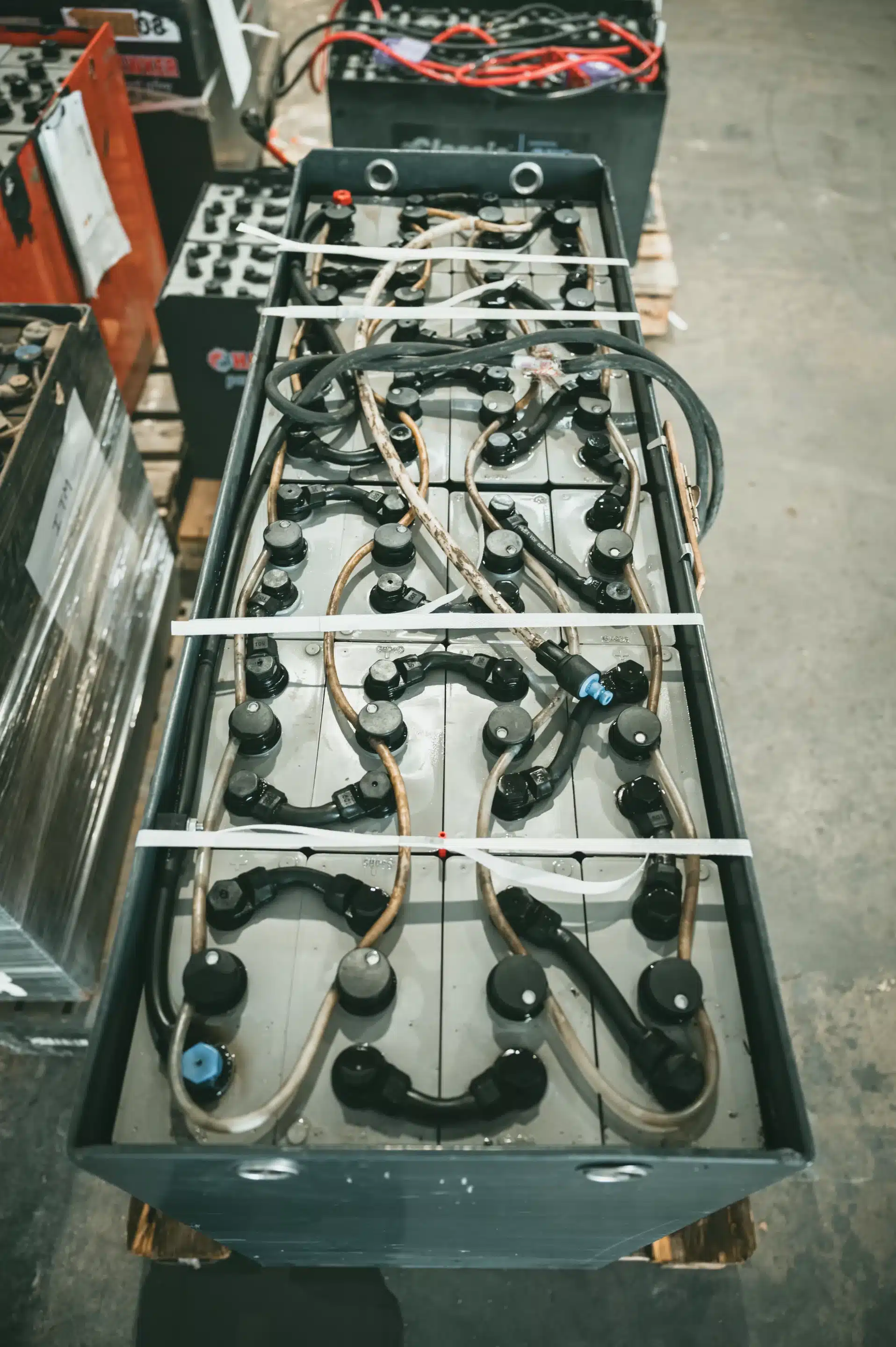
A 48 V battery is generally made up of 24 individual 2 V cells connected in series. An 80 V battery contains 40 cells.
The voltage measured at the terminals therefore reflects the combined behaviour of all these cells.
One cell may begin to show signs of weakness while the overall voltage still appears to be within the expected range.
For this reason, maintenance procedures may include measuring and monitoring the individual voltage of each cell. On flooded lead-acid batteries, electrolyte specific gravity also provides valuable additional information.
If one cell shows a voltage or specific gravity that differs significantly from the others, it can become the weak point of the entire battery.
Most importantly, voltage alone does not provide an accurate indication of the battery’s actual available capacity.
A battery may show a normal voltage after charging while delivering significantly reduced operating time when placed under load.
To assess its actual condition, a battery diagnosis should be carried out and, when necessary, followed by a capacity test under controlled conditions.
Good practice: monitor the individual cells and track how their measurements change over time rather than relying solely on the battery’s overall voltage.
7. Waiting until the forklift can no longer complete a full shift before taking action
This is probably the mistake that costs the most in the long run.
In many companies, the battery remains largely unnoticed as long as the equipment continues to operate properly.
Then the operating time starts to decrease.
The forklift needs to be recharged more often, the backup battery is used more frequently, and operators gradually begin adapting their organisation around the problem.
In some cases, replacement is only considered at this stage.
However, a loss of capacity does not automatically mean that a battery needs to be replaced.
It may be caused by several factors:
- an imbalance between cells;
- insufficient maintenance;
- inappropriate charging conditions;
- a faulty cell;
- sulfation of the plates.
When the loss of capacity is caused by reversible sulfation and the battery’s overall condition allows it, regeneration may be considered to restore some or all of its performance.
However, diagnosis remains essential.
Not every battery should be regenerated. Likewise, not every battery showing reduced operating time needs to be replaced immediately.
Good practice: take action before failure occurs so that several options remain available: maintain, correct, regenerate or replace only when it is genuinely necessary.
Before replacing the battery, check whether it can be regenerated.
Discover the different stages involved in treating a lead-acid battery, from the initial diagnosis through to the final capacity test.
Temperature also plays an important role
Temperature is another major factor affecting the performance of a lead-acid battery.
Electrochemical reactions are directly influenced by temperature. Higher temperatures accelerate these reactions, but they also speed up certain ageing mechanisms.
Conversely, lower temperatures can temporarily reduce the available capacity.
Reference values and acceptable operating ranges vary depending on the battery technology and manufacturer. The documentation for each battery should therefore remain the main reference.
This becomes particularly important when batteries are used intensively, recharged and then returned to service quickly without sufficient time to cool down.
What checks should be carried out on a traction battery fleet?
There is no single inspection frequency that applies to every fleet. It depends in particular on the battery technology, the number of shifts, the intensity of use and the operating environment.
However, regular monitoring can include several key checks:
- the visual condition of the battery tray and cells;
- the cleanliness of the battery;
- the condition of cables, plugs and connections;
- the electrolyte level for flooded lead-acid batteries;
- the overall voltage;
- the voltage of individual cells;
- electrolyte specific gravity when the technology allows it;
- temperature;
- charge and discharge history when available;
- changes in operating time and available capacity.
The objective is not simply to obtain a snapshot of the battery’s condition at a given moment.
It is above all the evolution of this data over time that makes it possible to identify a developing issue before it becomes a failure.
Maintenance, regeneration or replacement: how do you decide?
The age of a battery alone is not enough to determine its condition.
Two batteries commissioned at the same time can show very different performance levels a few years later depending on how they are used, their charging cycles, operating temperature and maintenance.
The question is therefore not simply:
“How old is this battery?”
But rather:
“How much capacity does it actually have left, and what condition is it in?”
Based on this diagnosis, several decisions can be made:
- keep the battery in service;
- correct poor charging or maintenance practices;
- carry out preventive maintenance;
- regenerate the battery when its condition allows it;
- replace a faulty cell when appropriate;
- replace the battery when its degradation is no longer reversible.
This is the approach we apply at Be Energy through our maintenance agreement: diagnose, monitor performance and take action at the right time rather than systematically waiting for a failure.
Moving from systematic replacement to proactive battery fleet management
A traction battery is an asset that naturally ages over time. However, its service life depends heavily on how it is used.
Charging, depth of discharge, electrolyte level, temperature, cleanliness and cell balance are all factors that can influence its performance.
Monitoring these parameters helps maintain the fleet’s operational capacity for longer and anticipate future needs more effectively.
When a battery begins to lose operating time, the first step should not necessarily be to order a replacement.
A diagnosis can first determine its actual condition, identify the cause of the performance loss and assess whether maintenance or regeneration could extend its service life.
You can also read our article on the cost of a regenerated battery compared with replacement.
Is your battery fleet starting to lose operating time?
Be Energy supports professionals with the diagnosis, maintenance and regeneration of their lead-acid traction batteries.
Our teams can assess your battery fleet to identify which batteries should remain in service, which can be regenerated and which genuinely need to be replaced.
Diagnosis, advice, prevention, regeneration: Be Energy supports you at every stage of the life cycle of your lead-acid traction batteries.
Contact us to maintain the operational capacity of your fleet while limiting premature replacements.
Technical sources
- Lead-acid traction battery operating and maintenance instructions
- Technical documentation on traction battery operation
- Forklift battery maintenance best practices
- Recommendations for watering a traction battery
- Recommendations for charging and maintaining traction batteries
Procedures may vary depending on the battery technology, model and charging system used. The battery manufacturer’s specific instructions should always take priority.