


Be Energy : Solutions Batteries Plus
LEAD-ACID BATTERIES
Lead-acid traction battery
Lead-acid traction batteries are the industry standard in professional and industrial settings. Durable, proven, and recyclable, they have been used for decades in forklifts, electric site vehicles, aerial work platforms, and stand-alone systems. Understanding how they work and their specific characteristics is the first step toward getting the most out of them and maximizing the lifespan of your equipment.
A lead traction battery is an electrochemical energy storage device designed to power an electric motor or onboard system continuously over extended periods. It is fundamentally different from a starter battery, whose role is limited to delivering a very short burst of current to start an internal combustion engine.
The lead traction battery is specifically designed to:
- provide stable and consistent energy over time,
- withstand hundreds of charge and discharge cycles,
- handle deep discharges without premature degradation.
It is referred to as a deep cycle battery, or “deep cycle“. This endurance is precisely what makes it essential in professional and industrial applications where grid power is unavailable or unsuitable.
How does a lead-acid traction battery work?
The operation of a lead traction battery is based on the conversion of chemical energy into electrical energy, and vice versa.
During discharge, an electrochemical reaction between the lead plates and the electrolyte releases electrons that flow through the circuit and power the motor or connected system. During charging, an external current is applied to reverse this reaction: energy is restored and stored again in the cells.
This cycle can be repeated several hundred times. Over time, however, internal components gradually wear out (notably due to the phenomenon of plate sulfation), which leads to a natural reduction in available capacity.
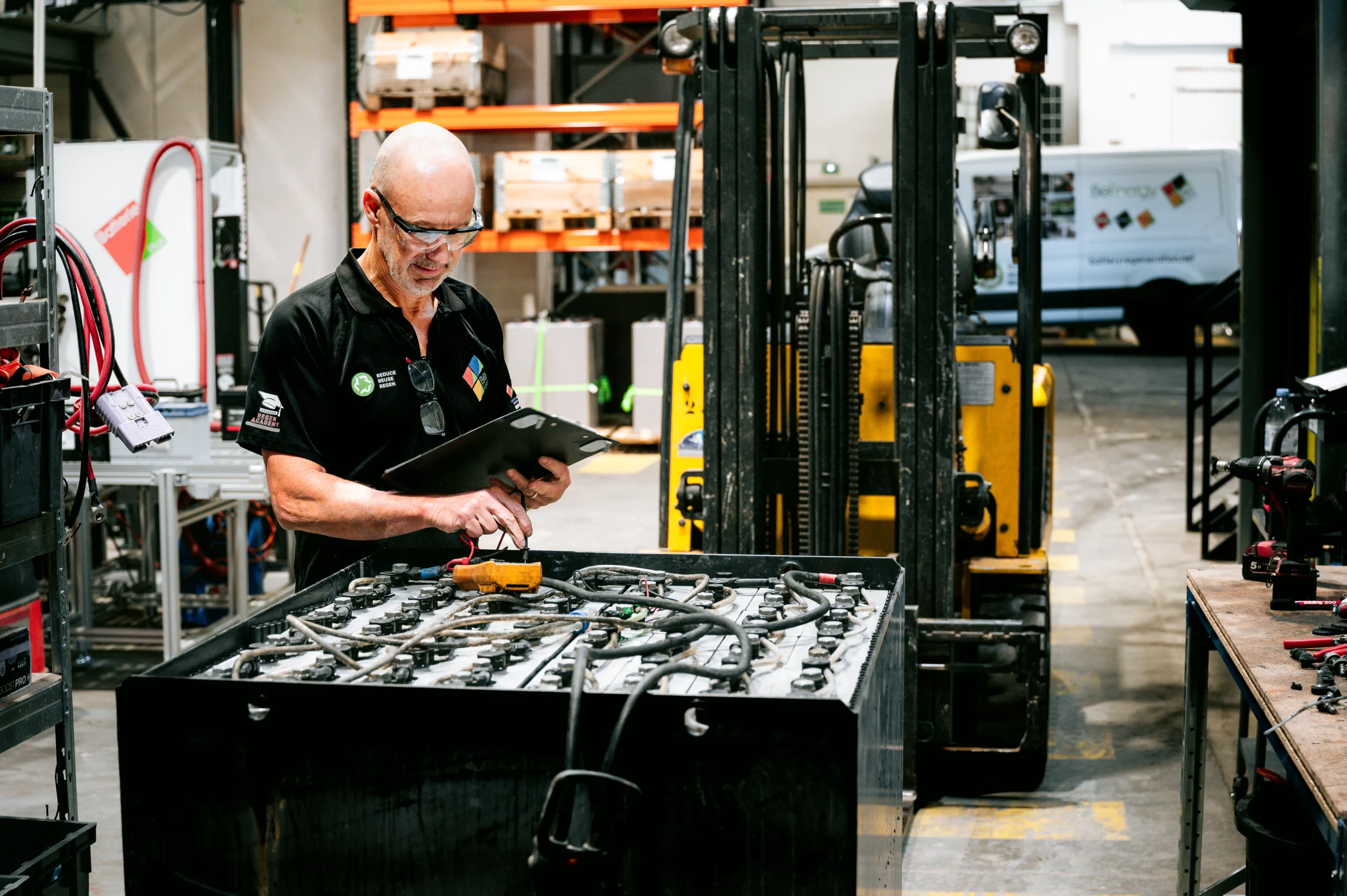
Composition of a lead-acid traction battery

The performance of a lead traction battery depends directly on the quality and design of its internal components.
Electrochemical cells are the core of the system. Their assembly determines the overall voltage of the battery: 12V, 24V, 48V, etc.
Electrodes consist of positive plates (lead dioxide) and negative plates (spongy lead), immersed in the electrolyte. Their surface area, thickness, and design directly influence:
- storage capacity (expressed in Ah),
- deliverable power,
- resistance to deep cycling,
- overall lifespan.
Electrolyte is the medium through which ions move between the plates. Its form varies depending on the technology used:
- liquid in traditional flooded lead-acid batteries,
- gel in GEL batteries,
- absorbed in fiberglass separators in AGM batteries.
The various lead-acid traction battery technologies
All lead traction batteries are not the same. Three main variants exist, each suited to specific applications.
Flooded lead-acid battery (or liquid electrolyte lead-acid) is the oldest technology. Robust and cost-effective, it requires regular maintenance, including checking and topping up the electrolyte level. It is well suited for industrial environments with established maintenance procedures.
AGM battery (Absorbed Glass Mat) uses an electrolyte absorbed in fiberglass separators. It is sealed, maintenance-free, and more resistant to vibration. It also charges faster and offers better resistance to deep discharges than flooded lead-acid batteries.
GEL battery uses a gelified electrolyte, making it particularly resistant to repeated deep discharges and high temperatures. It is often the preferred technology for intensive deep-cycle applications, such as forklifts or multi-shift industrial handling equipment.
Applications of lead-acid traction batteries
Lead traction batteries are used in a wide range of professional and leisure applications:
- Material handling and logistics: forklifts, electric pallet trucks, stackers, order pickers,
- On-site electric mobility: industrial utility carts, cleaning vehicles, airport tractors,
- Industry and specialized equipment: aerial work platforms, autonomous machines, construction equipment,
- Leisure and off-grid power: motorhomes, boats, off-grid solar installations.
In all these contexts, the lead traction battery fulfills a common need: providing reliable, durable, and cost-effective onboard energy.
Service life and wear factors
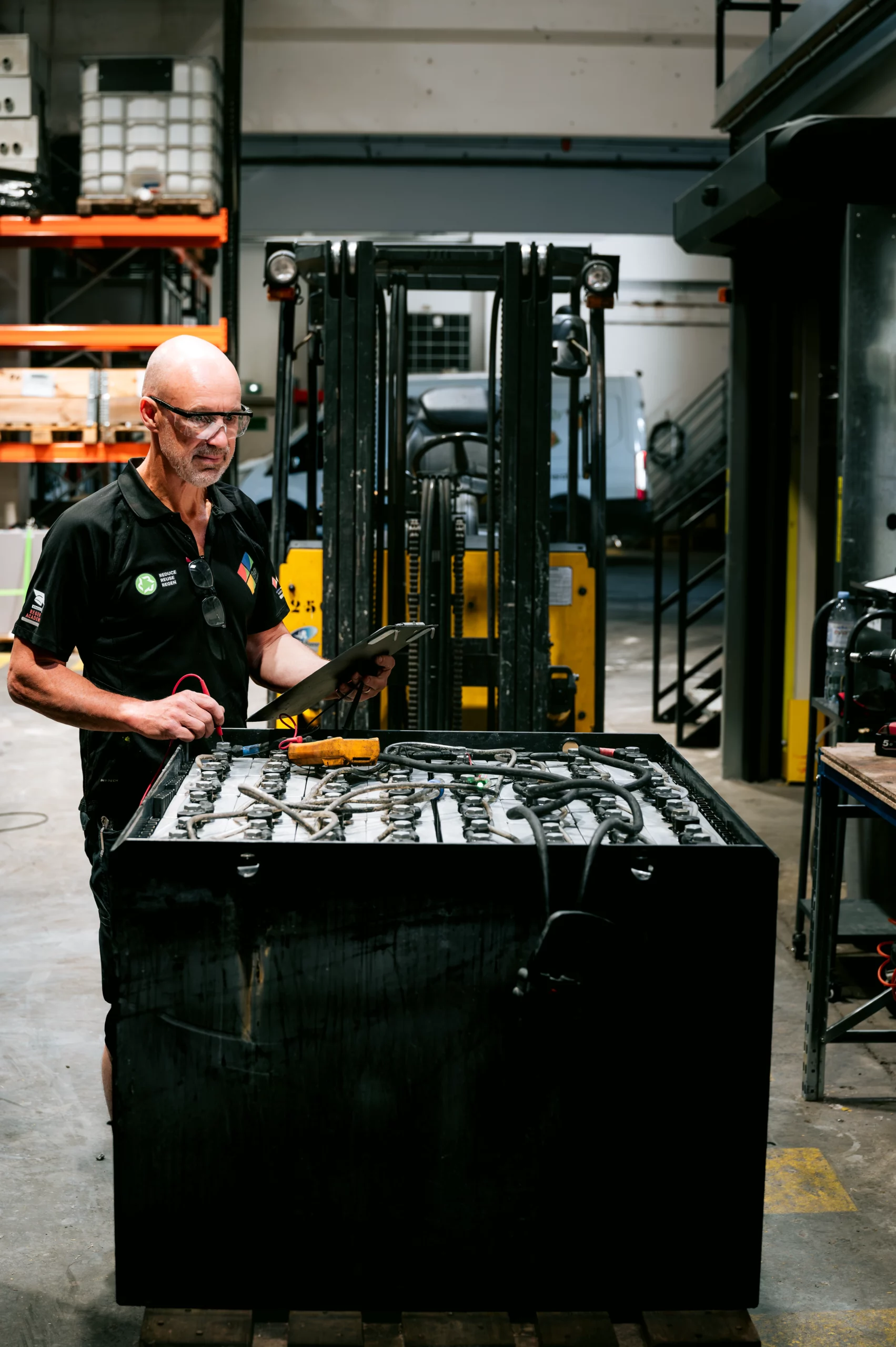
The lifespan of a lead traction battery is generally between 500 and 1,500 cycles. This wide range is explained by the importance of operating conditions and maintenance.
The main factors influencing battery lifespan are:
- depth of discharge per cycle (ideally limited to 80%),
- quality and suitability of the charger used,
- respect of full charging times,
- ambient storage and operating temperature,
- regular maintenance (for flooded batteries).
Improper use, such as excessively deep discharges, repeated partial charging, or operation in extreme temperature conditions, can reduce lifespan by half or more. Conversely, a properly maintained and correctly sized battery can easily reach the upper end of this range.
Regeneration of Lead-Acid Traction Batteries: Extending Service Life
Over time, lead traction batteries lose capacity, mainly due to sulfation: a build-up of lead sulfate crystals that forms on the plates and gradually reduces their active surface area.
Lead traction battery regeneration involves applying a specific electrical treatment to dissolve these crystals and restore a significant portion of the original capacity. The benefits are tangible:
- partial or full capacity restoration,
- extended equipment lifespan,
- reduced costs linked to premature replacement,
- lower environmental impact.
At Be Energy, lead traction battery regeneration is at the core of our activity. It is a serious and economically relevant alternative to systematic replacement, aligned with a sustainable asset management approach.
How to Choose the Right Lead-Acid Traction Battery?
Incorrect sizing is one of the main causes of premature battery wear. To select the right lead traction battery for your application, several criteria must be carefully evaluated:
- required voltage (12V, 24V, 48V, etc.),
- capacity in ampere-hours (Ah) depending on the desired autonomy,
- technology suited to the application (flooded, AGM, or GEL),
- daily usage intensity and frequency,
- environmental constraints (temperature, humidity, vibration),
- purchase budget and total cost over the lifespan.
Technical support helps avoid sizing errors, select the right technology, and optimize return on investment over the entire lifecycle of the equipment.
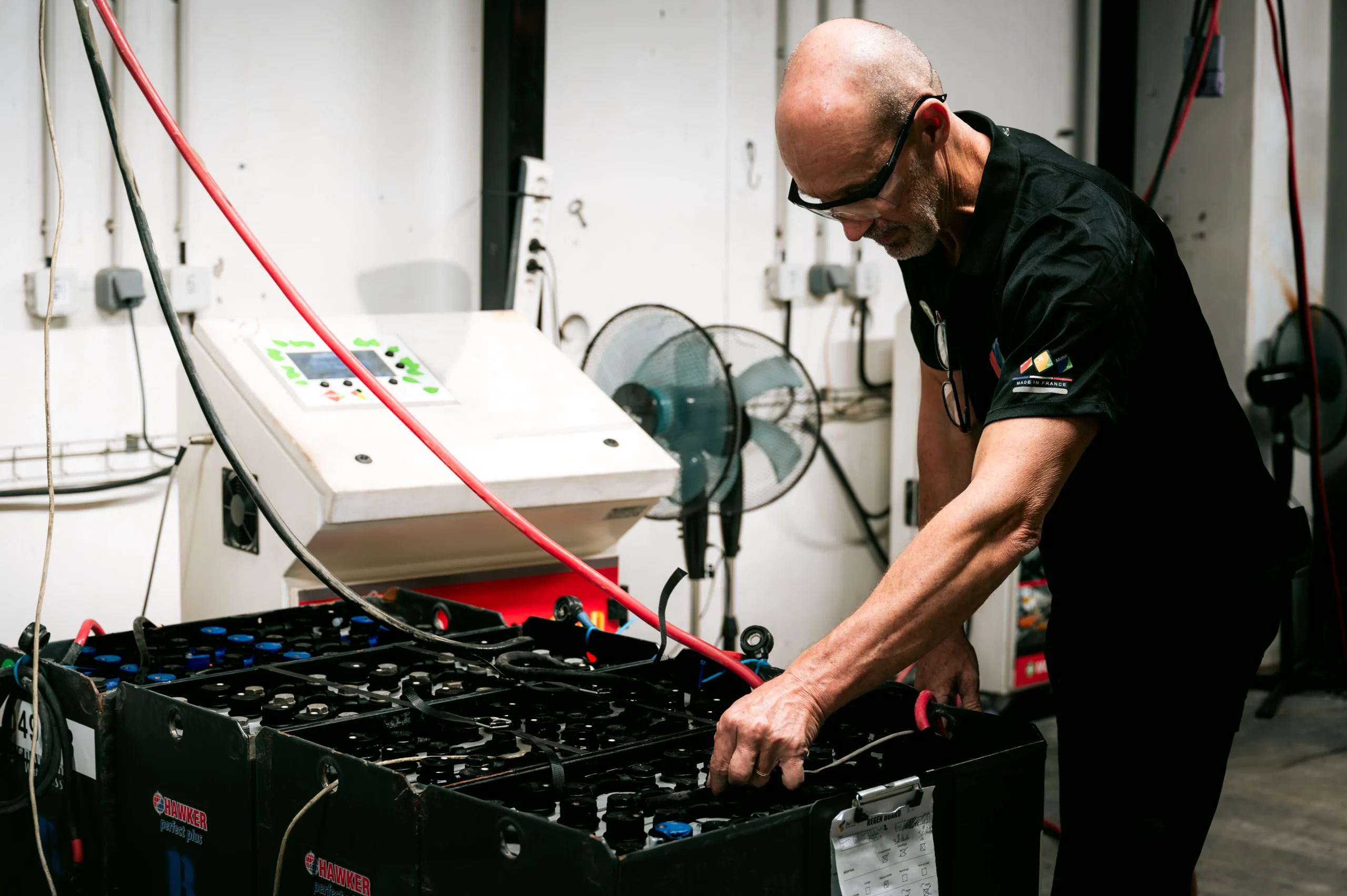
Be Energy, a specialist in lead-acid traction batteries
Diagnosis, consulting, prevention, regeneration: Be Energy supports you at every stage of the lead traction battery lifecycle. Our technical expertise and commitment to sustainable resource management make us a trusted partner for professionals in industry, logistics, and mobility.
Contact us for a tailored analysis of your needs.