A new energy approach: regenerating NiMH batteries for urban display infrastructure
Be Energy announces the signing of a contract with JCDecaux, the world leader in outdoor advertising, for the regeneration of NiMH batteries used in street furniture across its entire urban advertising network in France.
Founded in 1964, JCDecaux operates in nearly 80 countries, has approximately 12,000 employees, and generates annual revenue of close to €4 billion.
Its devices, deployed in several thousand cities, rely on technical infrastructure, a significant portion of which is powered by stationary NiMH batteries that supply autonomous street furniture.
In this context, the energy reliability of this equipment is a critical operational issue. Historically, the most common solution was to systematically replace batteries at the end of their life.
The partnership with Be Energy marks a change in approach:
rather than replacing them, JCDecaux has opted to regenerate NiMH batteries for its street furniture.

A closed-loop industrial organization dedicated to the regeneration of NiMH batteries used in street furniture
Under this contract, JCDecaux entrusts Be Energy with the complete management of the NiMH battery regeneration cycle for street furniture.
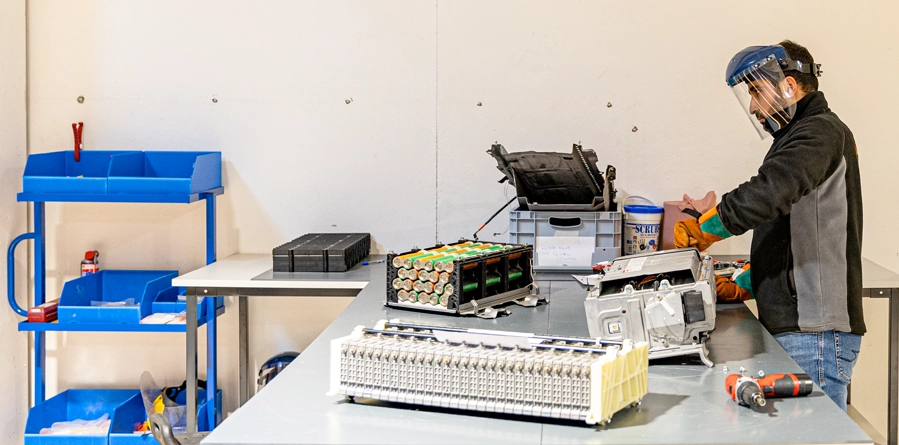
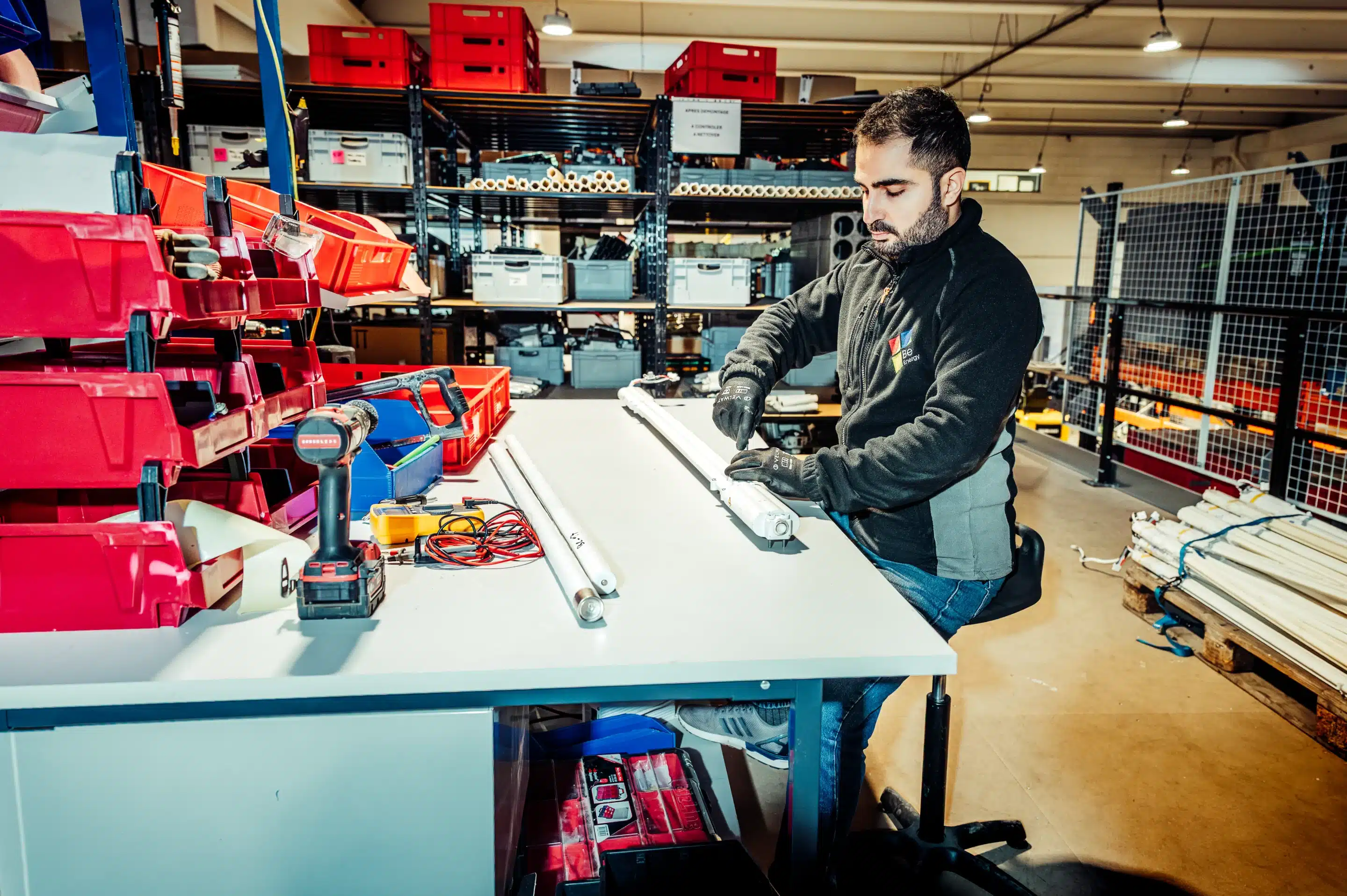
Used batteries are shipped to Be Energy’s workshops, where they undergo a thorough diagnosis, a regeneration process, and then reconditioning in the form of new operational packs. These packs are then shipped back according to the needs expressed by JCDecaux’s agencies and field teams.
This closed-loop organization ensures a continuous flow of available batteries, limits service interruptions for street furniture, and significantly reduces dependence on the purchase of new batteries.
A space dedicated to the regeneration of JCDecaux batteries within the Be Energy workshops
In order to guarantee optimal processing of the volumes entrusted by JCDecaux and to ensure response times, Be Energy has set up a dedicated area within its workshops for the regeneration of NiMH batteries used in street furniture.
This space makes it possible to structure flows, further industrialize diagnostic, regeneration, and reconditioning operations, and ensure rigorous traceability for each pack processed.
This dedicated organization strengthens Be Energy’s ability to meet JCDecaux’s operational requirements while maintaining a high level of quality and reliability in the operations carried out.

Measurable economic and environmental gains
Regenerating NiMH batteries for street furniture significantly extends their useful life.
For JCDecaux, this translates into fewer purchases of new batteries, lower logistics and supply costs, and a reduction in the volume of waste from end-of-life batteries.
Beyond the economic aspect, the environmental impact is also reduced. As the manufacture of new batteries is particularly resource- and energy-intensive, regeneration helps to limit the carbon footprint associated with the life cycle of this equipment.
A partnership aligned with a strategy of sustainable performance and circular economy
By drawing on Be Energy’s expertise, JCDecaux is strengthening its sustainable performance strategy by applying concrete solutions to its existing equipment.
This collaboration illustrates the ability of major players in urban development to reconcile service continuity, cost control, and reduced environmental impact.
This partnership demonstrates that the regeneration of NiMH batteries in street furniture is now establishing itself as a credible industrial response to the energy challenges facing large-scale urban infrastructure.