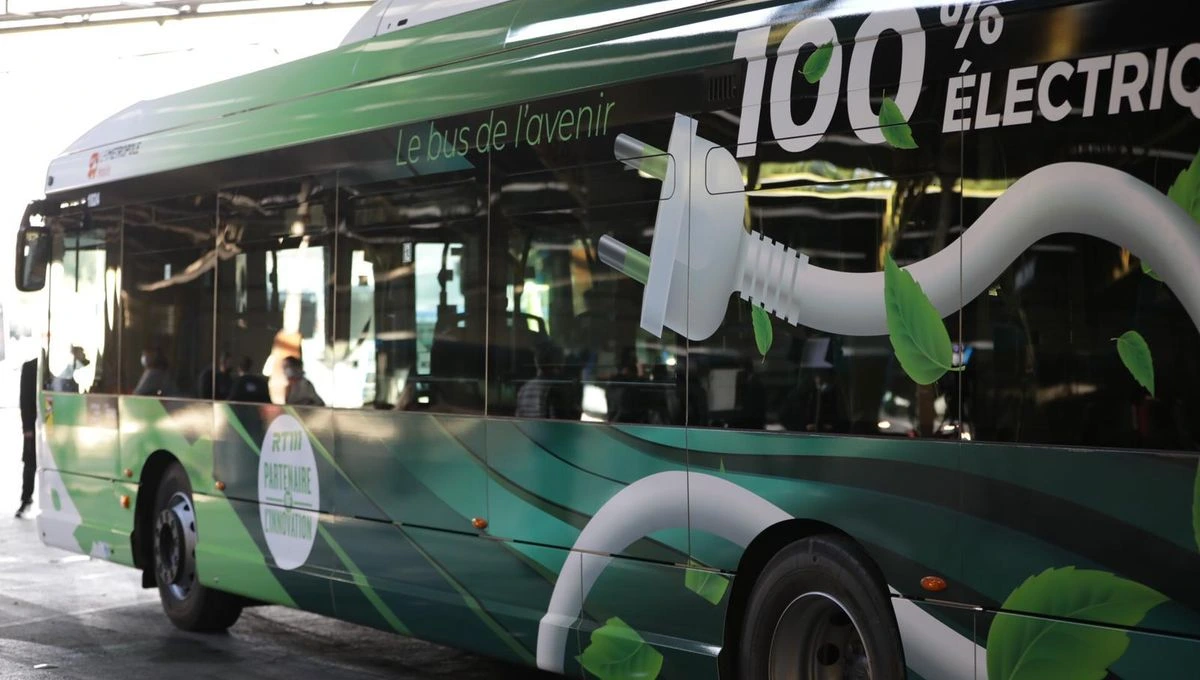
An electric bus in service in the Bouches-du-Rhône, the pilot region for the REBORN project led by Be Energy.
Be Energy wins REBORN call for projects to extend the life of electric vehicle batteries
Be Energy is proud to announce that it has been selected as part of a call for projects dedicated to developing innovative solutions for the management and reuse of lithium batteries from electric vehicles.
This project, called REBORN, marks a new step in our commitment to the circular economy and the development of technologies that extend battery life while reducing their environmental impact.
A major challenge for the future of electric batteries

A booming lithium-ion battery market with massive potential for remanufacturing.
With the rapid growth of electric mobility,
an increasing volume of batteries will gradually reach the end of their first usage cycle in the coming years.
Globally, the market for lithium-ion batteries
is expected to grow from around $65.9 billion in 2021 to nearly $274 billion by 2030.
In this context, France is following the same trend: the
French industrial capacities
planned under the France 2030 program are expected to enable the production of around 100 GWh of batteries per year by 2030.
This corresponds to nearly 1.7 to 2 million
electric vehicle batteries
per year.
When several years of sales are combined, this represents a fleet of several million batteries in circulation in France by that time,
to which must be added
batteries for stationary storage and power tools,
which are far more numerous but smaller in size.
However, when a battery is no longer suitable for automotive use, it often still retains
between 70% and 80% of its original energy capacity.
The challenge is therefore crucial:
to avoid premature recycling and maximize the value of resources that have already been extracted and processed.
The REBORN project therefore aims to develop new methods to:
-
accurately diagnose the state of health of batteries,
-
identify the cells that are actually failing,
-
Restore and remanufacture battery packs to extend their lifespan while maintaining the same usage.
This approach helps optimize the use of resources while reducing the carbon footprint associated with the production of new batteries. By limiting the need to manufacture new batteries, the consumption of mineral resources such as lithium, cobalt, nickel and graphite is significantly reduced, materials whose extraction is energy-intensive, polluting and a source of geopolitical tensions.
At Be Energy, we believe that reuse must become the priority before recycling, in order to build a more sustainable energy model.

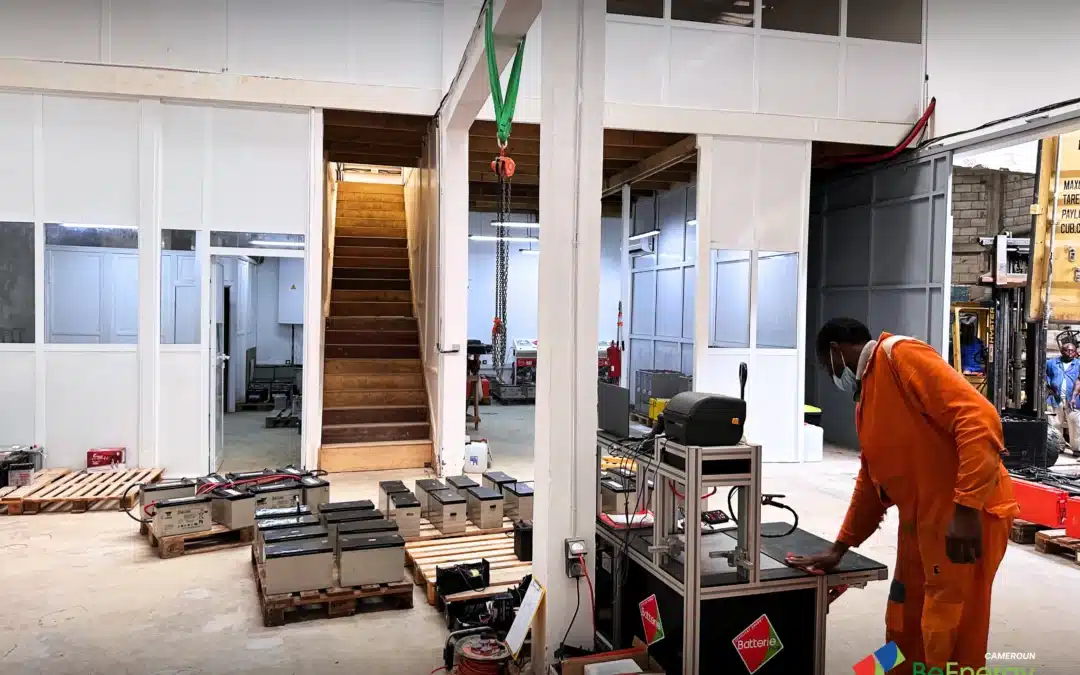
A lithium battery remanufacturing line, at the heart of Be Energy’s future industrial facility in the South region.
A two-year research and development program
The REBORN project will run for approximately 24 months and will mobilize a total budget of more than €1.3 million.
This program will notably finance:
- research and development activities,
- the design of advanced diagnostic tools for lithium batteries,
- the development of industrial remanufacturing processes,
- the development of a secure workstation dedicated to high-voltage batteries.
Thousands of electric vehicle batteries (buses, coaches, trucks and cars) will be analyzed and tested as part of this program.
The objective is to demonstrate that industrial remanufacturing of lithium batteries is possible, reliable, economically viable and environmentally beneficial, directly contributing to the achievement of the United Nations Sustainable Development Goals (SDGs).
Each ton of remanufactured batteries avoids the extraction and production of new batteries, representing the equivalent of 12 tons of CO₂ saved, thus contributing to the decarbonization of industrial activities and transport.
A location at the heart of an industrial ecosystem
The experiments will be conducted in collaboration with several industrial and logistics partners.
Some of the operations will be carried out in the Bouches-du-Rhône region, near Marseille, within an industrial ecosystem involved in energy transition and the circular economy.
This positioning will enable the creation of a genuine value chain around the second life of batteries.

A project funded and led by the Bouches-du-Rhône Departmental Authority – France
Economic benefits for the region
Beyond technological innovation, this project also represents a significant opportunity for local economic development.
In the long term, the industrialization of the solutions developed within the REBORN project could lead to the creation of an industrial site dedicated to battery remanufacturing in the Sud region, a strong driver of industrial development and sustainable jobs in a territory already committed to the circular economy and the second life of batteries, as demonstrated by the involvement of the region Provence-Alpes-Côte d’Azur.
The objective is to reach around 25 jobs in the coming years, particularly in the following fields:
-
battery specialist technicians
-
electronics and energy engineers
-
diagnostics and data specialists
-
industrial operators
This momentum fully aligns with Be Energy’s vision:
developing new professions around the circular economy and the energy transition.
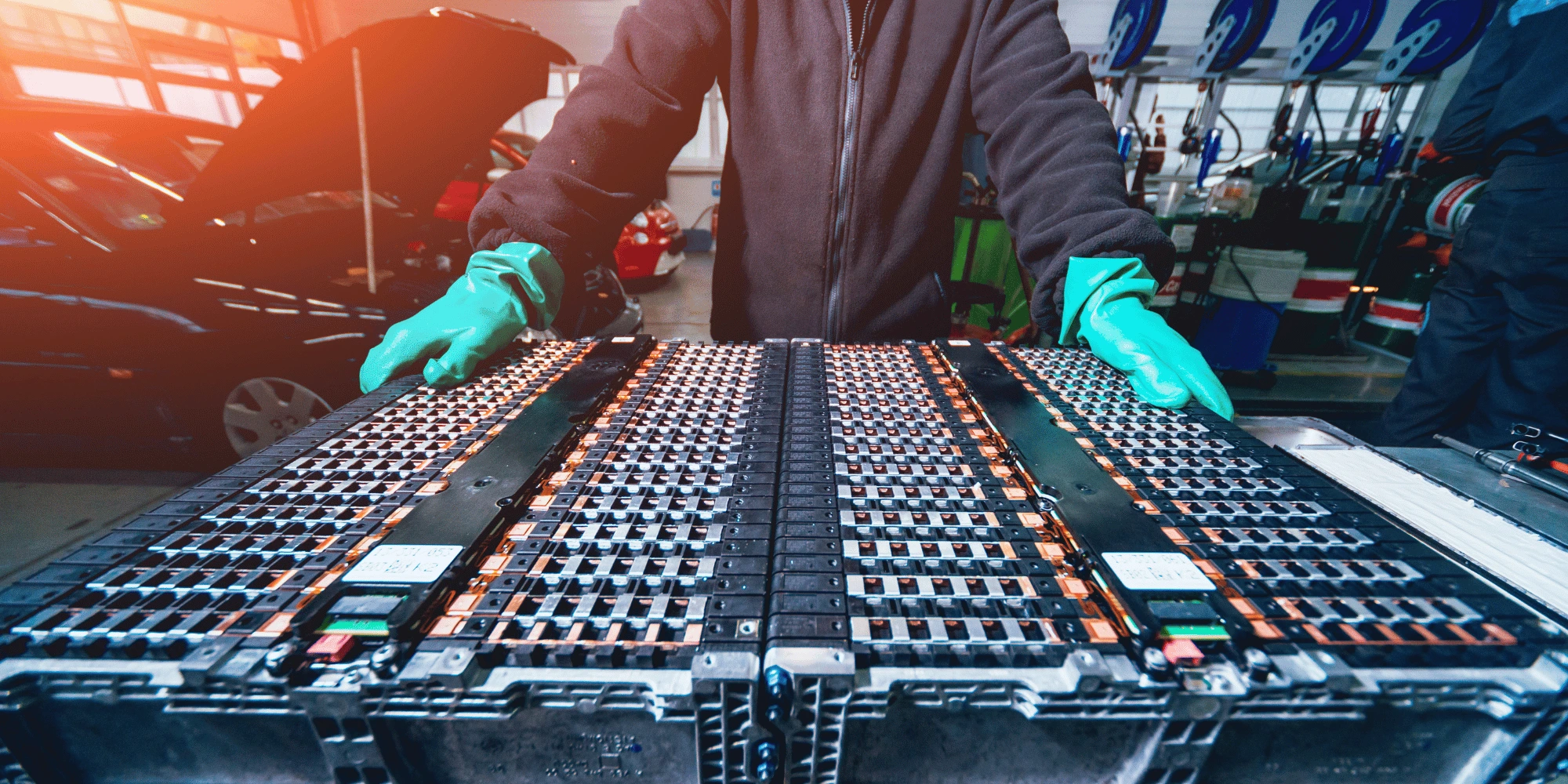
The REBORN project is boosting the regional economy and creating sustainable jobs through the local remanufacturing of batteries.
Recognition of Be Energy’s expertise
Since its creation, Be Energy has been developing technologies to regenerate and extend the life of batteries in many sectors: industry, mobility, telecommunications, and energy storage.
Today, our solutions are deployed in more than 50 countries, with several hundred pieces of equipment installed around the world.
The REBORN project is further recognition of our expertise and confirms the role that Be Energy can play in the development of a European battery reuse industry.
At Be Energy, we are convinced that extending the life of batteries is one of the most effective ways to reduce the environmental impact of the energy transition.
This project marks an important step in turning this vision into industrial reality.