

Be Energy: Batteries Plus Solutions
NIMH BATTERIES
How does a NiMH battery work?
Although lithium batteries are in the spotlight, NiMH (nickel-metal hydride) batteries remain an essential solution. Renowned for their robustness and safety, they are used in everyday objects as well as in the most famous hybrid cars.
What is a NiMH battery?
A NiMH battery is a rechargeable battery that stores energy through a chemical reaction between nickel and hydrogen. Unlike older cadmium batteries (NiCd), it is more environmentally friendly because it does not contain highly toxic heavy metals.
Where can it be found?
- In our drawers: The famous rechargeable AA and AAA batteries.
- On the road: Hybrid engines (such as the Toyota Prius).
- In the city: Illuminated billboards or solar-powered bus shelters.
How does a NiMH battery work?
Charging phase: Under the effect of electric current, hydrogen is extracted from the electrolyte and stored in an electrode composed of a metal alloy (hydride). This alloy acts like a sponge capable of stabilizing hydrogen.
Discharge phase: The hydrogen is released, triggering a redox reaction that generates a constant flow of electrons to power the external circuit.
Technical reliability: The structural stability of these components allows NiMH batteries to withstand several thousand charge/discharge cycles before any significant degradation of their nominal capacity is observed.
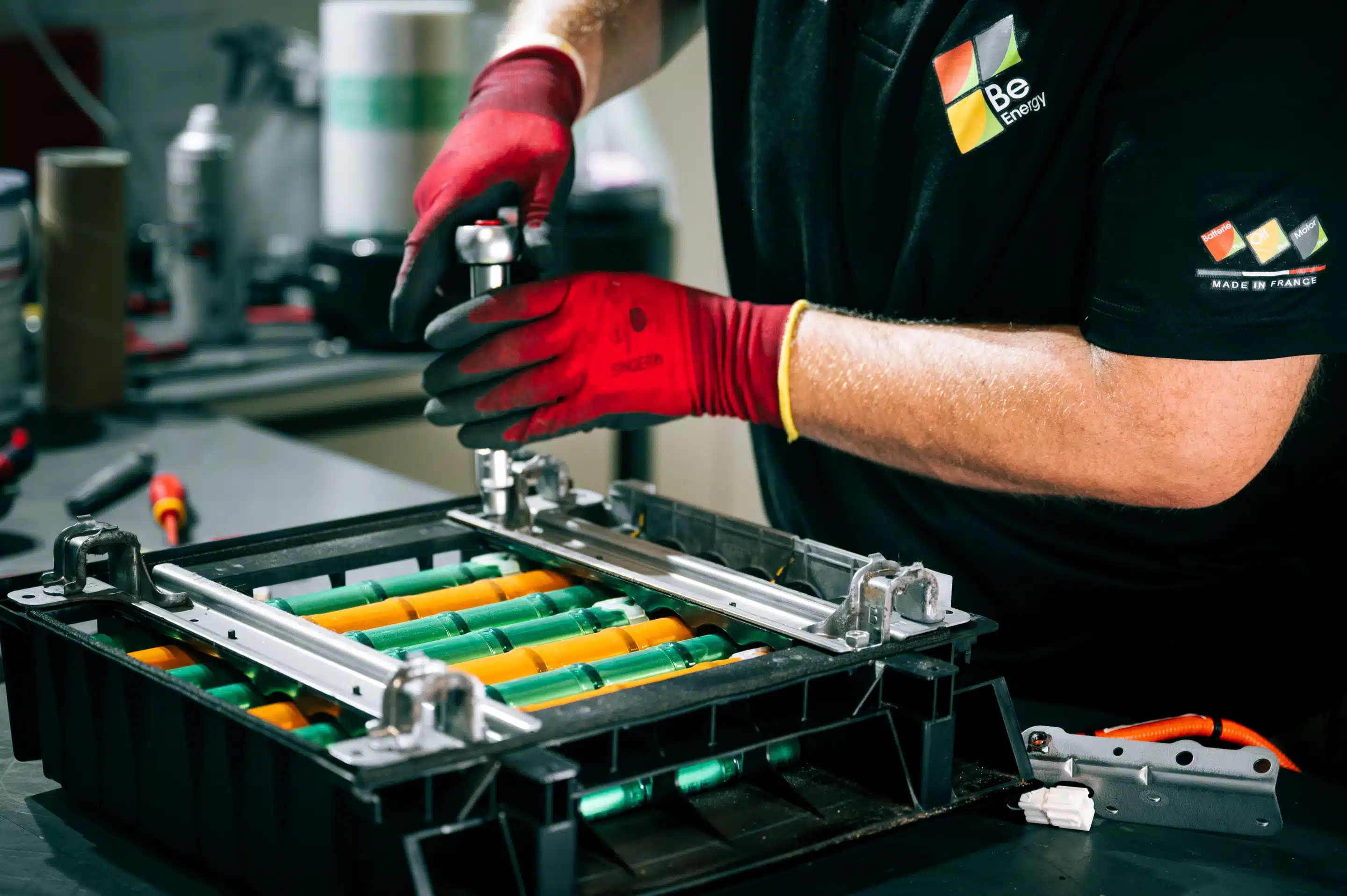
Strategic applications in hybrid mobility
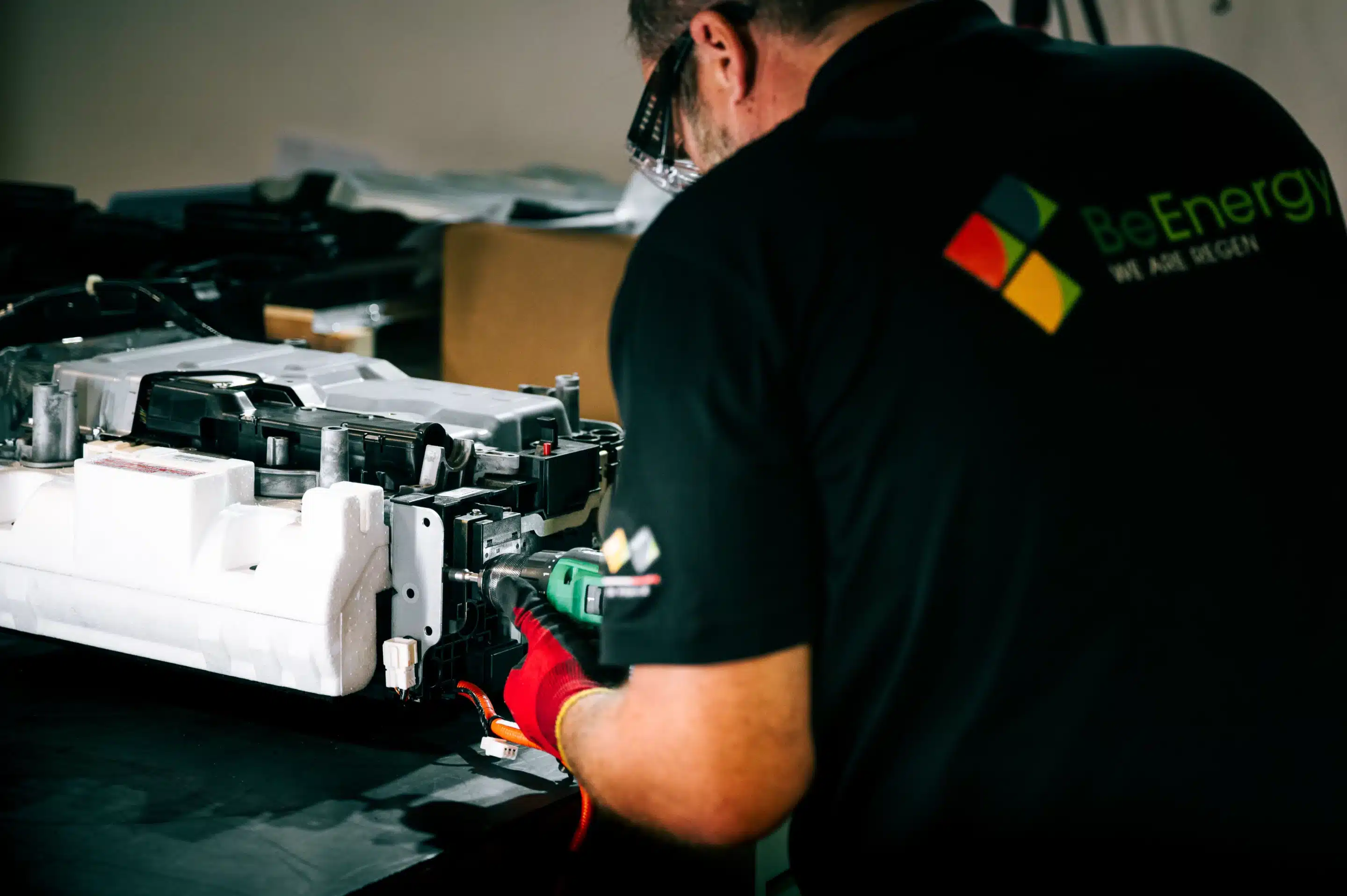
In the automotive sector, and more specifically for non-rechargeable hybrid vehicles (HEVs), NiMH technology is favored for its “energy buffer” function.
Regenerative braking management: During deceleration phases, kinetic energy is converted into electricity. NiMH chemistry is particularly effective at absorbing these high, intermittent charging currents without the risk of thermal overload.
Optimization of engine torque: During acceleration, the battery instantly releases stored energy to assist the combustion engine, thereby reducing fuel consumption and CO2 emissions.
Industrial example: In a benchmark model such as the Toyota Prius, the NiMH battery is not designed to offer extended electric range. Its role is to maximize overall energy efficiency by systematically recovering energy that would otherwise be dissipated as heat during braking.
Formats and architecture: Cylindrical vs. Prismatic
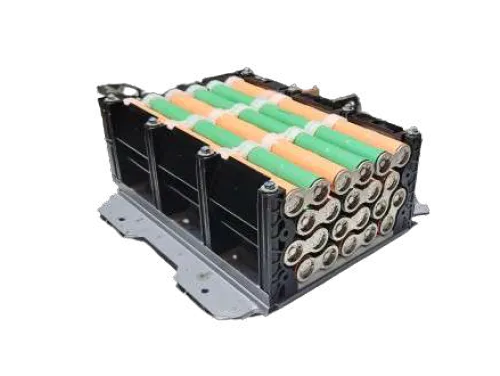
The physical architecture of NiMH cells is adapted according to integration and power constraints:
-
Cylindrical format: robustness and performance
The cylindrical format of battery cells, largely derived from standard rechargeable batteries, is characterized by excellent mechanical strength and very good heat dissipation. Its geometry allows it to effectively withstand vibrations, shocks, and stresses associated with frequent charge and discharge cycles, making it a particularly suitable solution for electric micro-mobility applications such as electric bicycles, scooters, and kick scooters.
In the automotive sector, this format is also used for applications requiring rapid and repeated charging, as its consistent thermal management helps to limit cell heating and reduce premature wear during intensive urban use.
-
Prismatic format: energy density and space optimization
The prismatic format prioritizes volume optimization and energy density thanks to its rectangular shape, which reduces wasted space when assembling battery packs. This format has become standard in the automotive industry for hybrid and electric vehicles, as it facilitates the design of compact, high-capacity, high-voltage batteries that integrate perfectly into modern chassis. Beyond mobility, prismatic cells are also widely used in stationary urban applications, such as energy storage for smart buildings or charging stations, where their compactness and modularity contribute to the stabilization of the power grid and better integration of renewable energies.
Peugeot Citroën, DS
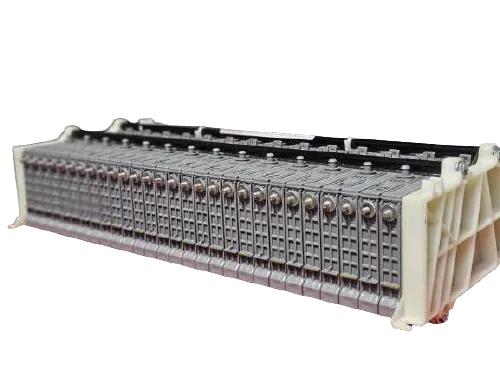
Toyota (Yaris, Prius, Auris, Rav4, Corolla) – Lexus
Resilience in urban environments and extreme conditions
NiMH technology offers decisive advantages for autonomous public facilities (solar bus shelters, signage) and mobility.
High thermal stability and maximum safety in public environments
NiMH (Nickel Metal Hydride) technology is establishing itself as the benchmark solution for autonomous public equipment, such as solar bus shelters and urban signage, thanks to its exceptional thermal stability. Unlike lithium, its aqueous electrolyte is non-flammable, making the risk of thermal runaway virtually zero. This feature ensures maximum safety in high-traffic areas, where energy storage systems must meet extremely rigorous civil protection standards without requiring complex cooling devices.
Cool resistance and service continuity at low temperatures
In addition, NiMH ensures unfailing continuity of service in the face of adverse weather conditions thanks to its remarkable resistance to cold. While lithium batteries see their conductivity drop and their recharge capacity freeze below 0°C, NiMH chemistry maintains excellent ionic mobility at low temperatures. This thermal resilience allows urban infrastructure to remain operational throughout the winter, ensuring the proper functioning of security lighting and connected services, even in extreme weather conditions.
NiMH and regeneration: A major driver of the circular economy?
One of the major advantages of NiMH chemistry lies in its intrinsic ability to be regenerated. Contrary to popular belief, a battery’s loss of performance is not always due to irreversible wear and tear on its components, but often to chemical phenomena such as internal crystallization or cell imbalance.
-
The regeneration process : Thanks to specific electrical cycle protocols (high-frequency charging/discharging), it is possible to dissolve crystalline formations and restore ionic conductivity. This allows a significant portion of the initial capacity to be recovered without having to replace internal components.
-
Operational and environmental impact : This curative maintenance approach reduces replacement costs by up to 70%. It significantly extends the service life of assets and avoids the environmental impact associated with manufacturing new batteries and premature waste disposal.


Waste reduction
Regenerating NiMH batteries extends the life of existing batteries, helping to reduce the amount of waste and minimize the environmental impact associated with the disposal of used batteries.
.

Financial savings
Regeneration is a more economical option than buying a new battery, as it allows your NiMH battery to be reused without any change of use.
50% cheaper

Preserving natural resources
By extending the life of your NiMH battery, regeneration helps save natural resources by avoiding the production of new batteries and the extraction of raw materials.

Lower CO2 emissions
The manufacture of new batteries is associated with CO2 emissions. Battery regeneration helps to reduce these emissions.
1 tonne of NiMH battery regenerated = 20 tonnes of CO2 saved.